Thomas Shield Bell (1912–1972)
My Paternal Grandfather
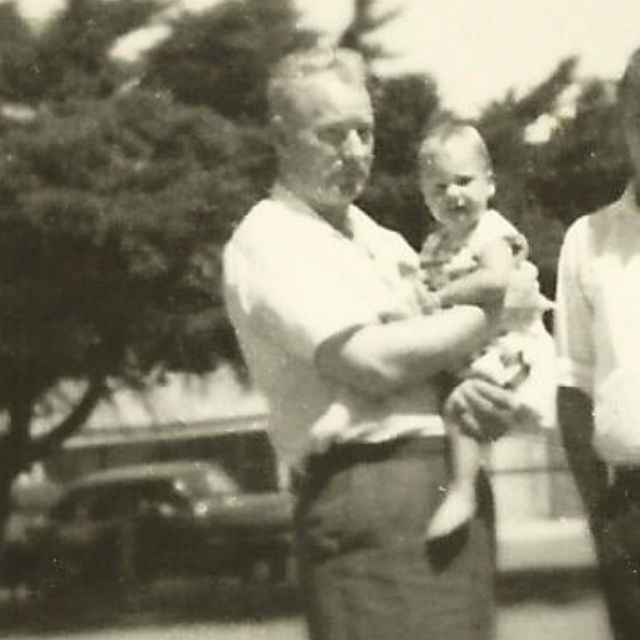
Thomas Shield Bell was my paternal grandfather.
I never had the opportunity to know him personally, his story forms an important part of my family’s history.
Through family history research, original records, and the occasional lucky discovery, I have slowly begun piecing together the life he lived. This page is my way of preserving his story – not only for my own family, but for future generations who may one day wonder where they came from.
Early Life
Thomas Shield Bell was born on 19 November 1912 in Wallsend, Tynemouth, Northumberland, England.
He was the son of John Thomas Bell (1879–1941) and Margaret Jane Tait (1880–1960) and grew up in a large family with ten siblings. Wallsend was a thriving industrial town, best known for its shipbuilding heritage along the River Tyne.
Growing up in northern England during the early twentieth century, Thomas would witness enormous social and economic change, including the First World War, the Great Depression and, later, the Second World War.

Marriage and Family
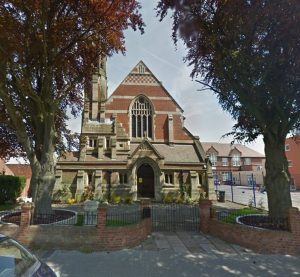
On Christmas Day, 25 December 1935, Thomas married Edna Gertrude Turner at St Barnabas Church, Leicester, Leicestershire.
Together they raised seven children over the following twenty-two years.
I have included only those family members who have passed away.
Deceased Children
– Thomas Winfield Bell (1936–2010)
– Robert Arthur Bell (1940–2021)
– Sylvia Maureen Emma Bell (1945–2023)


Working Life
Thomas worked as an engineer, a skilled trade that involved assembling, maintaining and repairing machinery.
Like many tradesmen of his generation, he worked quietly behind the scenes, keeping industry operating through practical skill and hard work. Although I know very little about his day-to-day working life, it was clearly an occupation that required reliability and experience.
Finding Thomas in the 1939 Register
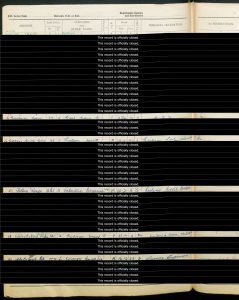
One of the biggest challenges in researching Thomas was finding him in the 1939 England and Wales Register.
For quite some time, I simply couldn’t locate him. Eventually I discovered why.
His surname had been recorded as “Beel” instead of “Bell.” At first glance it appeared to be a completely different family.
Another complication was that many entries in the 1939 Register remain closed to protect the privacy of people who may still have been living. When I located Thomas’s record, his wife Edna had been closed and therefore did not appear beside him. On Edna’s record, Thomas’s details were closed instead.
The addresses also appeared inconsistent. Thomas’s entry simply recorded “16 – Felling, Durham”, while Edna’s record listed the full address as 16 Burlison Gardens, Felling, Durham.
By comparing the original handwritten register, the matching address and the incorrectly recorded surname, I was finally able to confirm that these records belonged to my grandparents.
Moments like this remind me that family history often involves detective work as much as research.

World War II
During the Second World War, Thomas served in the 21st Battalion of the Durham Home Guard based in Gateshead.
His service began on 20 September 1940 and continued until 31 December 1945, when the Home Guard was officially disbanded.
The Home Guard was made up of ordinary men who volunteered to defend their local communities during a time when Britain faced the threat of invasion. While many served close to home, their contribution formed an important part of Britain’s wartime defence.
Although Thomas’s service may never have made headlines, it represents another quiet chapter in the life of an ordinary man who answered the call when his country needed him.


A New Beginning in Australia
In 1950, Thomas and his family made the life-changing decision to migrate to Australia under the Assisted Passage Migration Scheme, commonly known as the “Ten Pound Pom” scheme.
Introduced after the Second World War, the scheme encouraged British families to settle in Australia by offering heavily subsidised fares. Adult migrants paid just £10 for the voyage, while children travelled free.
On 28 September 1950, the Bell family travelled to Glasgow, Scotland, where they boarded the RMS Cameronia. After a voyage of more than a month, they arrived in Fremantle, Western Australia, on 1 November 1950 before eventually making their way to Melbourne, Victoria.
Like thousands of other British families, Thomas and Edna left behind familiar surroundings in the hope of building a new life in Australia. What they expected to find – and what they actually experienced – are questions I continue to explore through my family history research.

The Family’s Return to England
The Bell family’s Australian journey came to an unexpected end.
In 1958, Edna returned to England as her parents were not in the best of health, taking the couple’s youngest son with her. At the time, she was pregnant, although this was not known to the family.
The couple’s youngest child was later born in England.
Thomas remained in Australia with the other children before eventually returning to England himself. Exactly when he returned, and how the family managed this difficult period, are unanswered questions we are still researching.
From the records and family accounts that have been gathered so far, it appears that Thomas and Edna’s marriage experienced periods of separation during their marriage. During these years, Thomas faced the enormous challenge of caring for a large family while working. Like many single fathers of the 1950s with little support available, the children spent time in children’s homes while he continued to provide for them.
Many parts of this chapter remain incomplete. As additional records and family memories are uncovered, we hope to better understand the choices they faced.
His Final Years
Thomas later returned to England. It’s unknown the date at this stage.
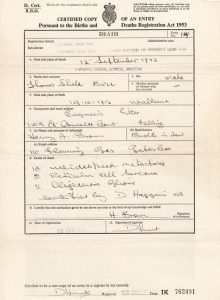
He died on 12 September 1972 at 159 St Oswald’s Court, Felling, Gateshead, aged just 59 years.
St Oswald’s Court was one of a series of high-rise tower blocks built during the post-war redevelopment of Gateshead. Designed by architect John Poulson, the buildings were intended to represent modern housing but later became symbols of poor design and urban decline. Most of the complex was demolished in the late 1980s.
Knowing that Thomas spent his final years there adds another layer to his story. The building no longer exists, but it remains part of my family’s history.
While researching Thomas, I found myself thinking about how easily ordinary lives disappear from history. Without photographs, documents and records, even our own grandparents can become little more than names on a family tree.
Preserving these stories is one small way of making sure they are remembered.
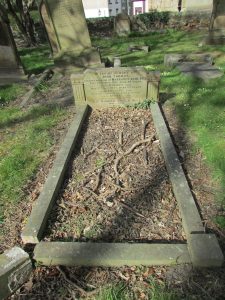
His Final Resting Place
Thomas Shield Bell died on 12 September 1972 in Newcastle upon Tyne, Northumberland, England, aged 59.
He was laid to rest at
St. Mary’s Churchyard in Heworth, Metropolitan Borough of Gateshead, Tyne and Wear, England
Although I never had the opportunity to meet my grandfather, knowing where he is buried provides a tangible connection to his life. A gravestone marks more than the end of a person’s life – it marks a place where family history becomes real.
As we continue researching the Bell family, I hope that one day I may have the opportunity to visit his grave, pay my respects, and walk the places that were once part of his everyday life.


Research Still to Do
☐ Visit St. Marys Churchyard
☐ Find employment records
☐ Learn more about his years in Australia
☐ Discover why the family returned to England
☐ Locate additional family photographs
Some chapters of Thomas’s life remain incomplete. Like many family historians, I’m still searching for the records and stories that may one day explain what happened during those final years of his marriage and why the family’s Australian dream came to an end.
Acknowledgements
A special thank you to my first cousin, [she knows who she is], whose passion for family history has preserved so much of our shared past. Many of the documents and discoveries for my paternal ancestors are the result of years of careful research and generosity in sharing that information with our family. I’m incredibly grateful for the work that she is doing to ensure these stories are not forgotten.